
Layer by Layer, Stories Emerge Along the Route
Today we explore sequencing map layers to reveal narratives along guided routes, turning a simple path into a living story that unfolds at the right moment. By ordering basemaps, overlays, labels, images, audio, and cues with intention, we shape emotion, clarity, and discovery. Expect practical steps, creative heuristics, and field-tested insights. Share your experiments, subscribe for future deep dives, and tell us where your routes stumbled or suddenly sang—the best lessons come from honest iterations and unexpected detours.
Designing the Arc: From Basemap to Epiphany
A compelling route experience begins with a narrative arc ordered through layers: quiet context first, then carefully timed reveals. Start with a calm basemap, add contextual overlays, and graduate to highlights that punctuate movement. Treat each waypoint like a chapter break balancing anticipation and clarity. Avoid dumping detail too early; let curiosity drive progression. Think scrollytelling principles applied to sidewalks, bike lanes, or museum corridors. When the final overlay appears, it should feel inevitable, earned by distance, attention, and trust.





Interaction That Guides Without Getting In The Way
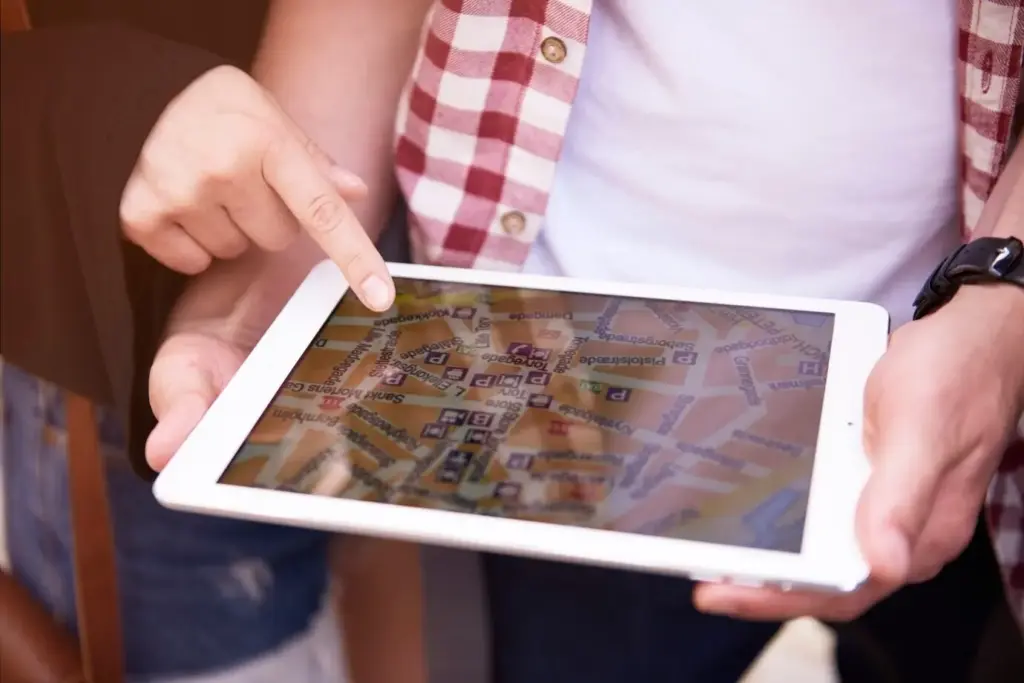
Good interaction feels like a handrail: present when needed, invisible when confidence grows. Prioritize tap-to-reveal for depth, haptics for safety-critical turns, and gentle audio prompts near complex junctions. Reduce cognitive load by staggering choices. Keep gestures consistent and forgiving. Use progressive disclosure to avoid crowding screens, allowing curiosity to lead. Build fallbacks for gloves, rain, glare, and battery stress. When interactions recede behind purpose, travelers remember places and stories—not menus, modals, or microcopy.

Microinteractions as Breadcrumbs
Design tiny, satisfying signals that confirm progress and invite the next step. A soft pulse when approaching a reveal, a brief vibration at a decision point, or a subtle route highlight after a correct turn builds assurance. Avoid fireworks; consistency outperforms novelty. Ensure redundancy: visual, auditory, and haptic cues for varied contexts. Reward attention with small insights, not only destination payoffs. Microinteractions can be your quiet narrator, always respectful of pace, weather, and situational awareness.

Accessibility Across the Route
Sequence layers with diverse abilities in mind. Provide high-contrast options, text resizing, and screen-reader friendly descriptions for overlays and images. Offer audio summaries and real-time transcripts. Avoid color-only distinctions; pair hue with pattern or icon shape. Mark terrain difficulty and safe alternatives. Ensure off-line fallbacks when connectivity drops. Give users control over cadence and verbosity. Inclusive sequencing does not dilute artistry—it broadens impact, ensuring more people can experience the route’s discoveries with confidence and delight.
Visual Grammar: Symbols, Color, and Motion
Your visual system is a language. Color sets mood and meaning; symbols convey roles and urgency; motion teaches sequence. Choose palettes tested for contrast and color-vision deficiency. Calibrate stroke widths and label weights by zoom. Use animation sparingly to connect states, not entertain. Keep a compact style guide so updates remain coherent. Resist decorative layers that compete with content. When your grammar is consistent, people read the map instinctively, freeing attention for discovery and reflection.
Color Palettes That Carry Meaning
Assign colors that reinforce narrative intent rather than simply attract attention. Use warm hues for human stories, cooler tones for environmental context, and neutrals for background scaffolding. Maintain consistent associations across the route so memory builds. Test in bright sun and low light. Provide a high-contrast mode that preserves meaning. When a color shifts, communicate a state change—not mere decoration. Thoughtful palettes reduce cognitive translation, letting people feel the message before they consciously parse it.
Symbol Hierarchy and Density
Symbol clutter is the fastest way to drown a story. Establish a clear hierarchy with size, weight, and simplification at smaller scales. Show fewer icons while moving, more when paused. Use pictograms with familiar metaphors and accessible labels. Defer specialized symbols until relevant. If density rises, collapse categories into grouped markers with preview summaries. Avoid animation that competes with reading. A respectful hierarchy turns the map into a calm companion, never a chaotic encyclopedia demanding constant decoding.
Spatial Sound and Narrative Timing
Audio adds intimacy and safety when hands and eyes are busy. Geofenced prompts can trigger voices, ambient soundscapes, or music that complements visuals. Use silence as punctuation, not absence. Blend crossfades so transitions feel natural, especially while walking or cycling. Provide transcripts and volume controls. Time messages to movement speed and context. When sound honors environment and attention, it becomes a trusted guide, enriching place-based stories without overwhelming navigation or masking critical situational awareness.
Testing the Route: Fieldwork, Analytics, Iteration
Real-world testing exposes truths prototypes hide. Walk or ride with fresh eyes, observing confusion points and emotional peaks. Collect lightweight analytics on pauses, rewinds, and skipped overlays—never tracking identities. Interview participants immediately, then again later to probe memory. Refactor layer order, simplify where friction spikes, and strengthen reveals that earned smiles. Test different times of day and weather. Publish changelogs so returning explorers sense progress. Iteration turns good routes into beloved rituals people recommend.

Shadow Runs and Observations
Before inviting the public, conduct shadow runs with varied participants: locals, first-time visitors, children, elders. Watch where hands hover or eyes squint. Note when conversation stops, laughter starts, or impatience appears. Document small frictions—gesture mismatches, mislabeled icons, late audio. Photograph confusing junctions and record ambient noise. These observations reveal where sequencing falters or shines. The goal is humility: the route teaches you how it wants to be told, step by iterative step.
Instrumentation Without Surveillance
Measure behavior ethically. Aggregate dwell times, completion rates, and interaction counts without storing identities or exact paths. Offer transparent data settings and a clear purpose for collection. Share learnings publicly when appropriate. Use client-side summaries and on-device processing when feasible. Resist vanity metrics; focus on indicators that improve clarity, safety, and delight. When analytics serve the traveler rather than the dashboard, you earn permission to refine. Respect builds the foundation every future insight stands upon.
Iterative Releases and Changelogs
Ship improvements in small, well-documented increments. Describe what changed, why it matters, and how it affects pacing or clarity. Invite feedback after each release and close the loop by acknowledging contributions. Keep rollback plans for experiments that underperform. Track seasonal variants and special-event overlays separately. A living changelog turns routes into evolving companions rather than static products. People notice care expressed through iteration, and that trust translates into shares, subscriptions, and generous word-of-mouth recommendations.
All Rights Reserved.